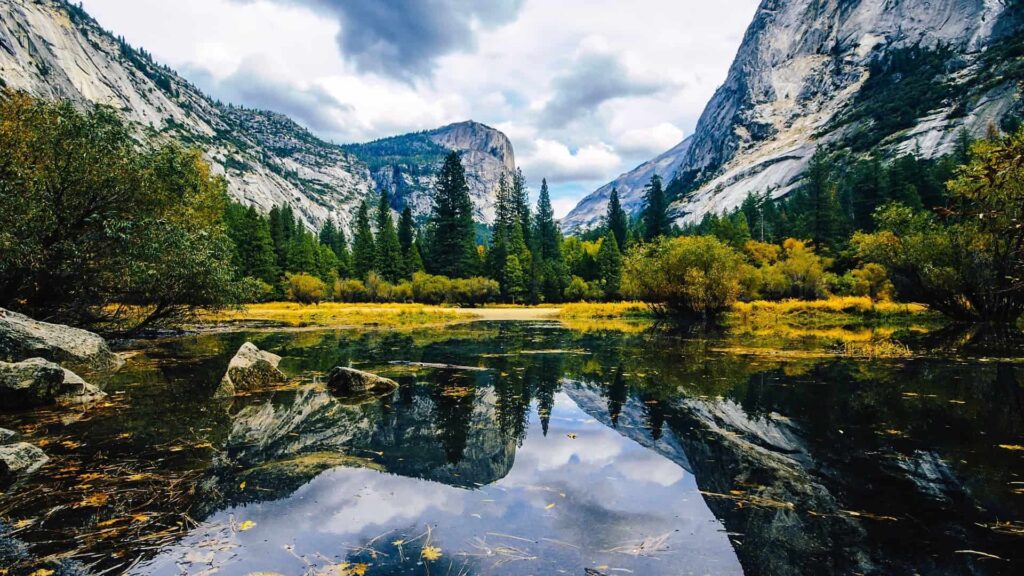
In a high, hidden valley surrounded by jagged peaks, there was a lake so still it looked like stone. The Sky-Mirror people lived on its shores, convinced that the water copied not just faces, but souls.
In that lake swam creatures they believed were spirits: sleek otters with bright eyes and clever hands. Children were taught never to harm them. “They carry our reflections when we are not looking,” elders said.
One year, a strange sickness swept the valley. People grew weak and hot. Coughs rattled the night. The fish they usually caught from the lake started floating belly-up, white as bone.
The shaman studied the dead fish and shook his head. “The water is angry,” he said. “We have offended the mirror.”
But they didn’t know how.
A girl named Nira, stubborn and observant, noticed something others didn’t. She saw a crooked stream of dark mud running into the lake from a new place on the shore, where men had been carving stone and dumping waste.
“Maybe the water is not angry,” she thought. “Maybe it is choking.”
She watched the otters. They, too, seemed thinner, their play less joyful. One day, she followed a skinny otter farther along the shore, away from camp.
The animal dove beneath a tangle of reeds and disappeared. When Nira pushed them aside, she gasped.
Behind the reeds was a second, smaller pool, fed by a clean underground trickle. In it swam a handful of fish, bright and healthy. The otters had found their own secret refuge.
The next day, while adults argued about sacrifices to appease the lake spirit, Nira dragged her best friend to the hidden pool.
“If we move fish from this clean place into the big lake,” she said, “will it fix everything?”
Her friend frowned. “If the big lake is bad, they will just die too.”
Nira bit her lip. “Then maybe we must clean the big lake instead.”
It was a ridiculous idea. How could two children clean a whole lake?
But they could follow the mud.
Over days, between chores, they traced the dirty stream back to the stone-cutters’ pit, where gray slurry poured into a channel leading straight to the water.
They tried to block it with rocks. The mud simply flowed around. They piled branches; the muck pushed through.
Out of frustration, Nira threw a stick at an otter watching from a nearby rock. It landed in the slurry, and to her surprise, the otter grabbed it, jammed it crosswise in the channel, then packed mud around it with quick paws.
“Look!” her friend cried. “It’s helping!”
Other otters appeared, drawn by the commotion. Together, children and animals built a crude dam—sticks, stones, mud—diverting most of the filth into a separate, stagnant pool instead of the lake.
The dead-fish slick began to shrink.
When adults noticed fewer corpses along the shore, they praised the spirits for forgiving them. Nira didn’t argue, but she kept visiting the dam, reinforcing it alongside her otter allies.
One evening, she slipped on wet rock and plunged into the cold lake. She flailed, water closing over her head. Panic blurred everything.
Soft fur brushed her hand.
Something grabbed her wrist—small but strong—and helped tug her toward shallower water. Coughing and sputtering, she crawled onto the shore, turning to see an otter vanish beneath the surface, leaving only ripples.
Months later, sickness faded. Fish returned. The Sky-Mirror people celebrated, offering thanks to the invisible powers of the lake.
Nira, now older, told her own version of the story to children: how animals knew where clean water flowed, how they helped build dams, how they saved clumsy girls.
In time, people forgot the words “stone-cutter’s pit,” but they remembered one rule: “Do not poison the streams. The otters are watching.”
And on still days, if you looked into that ancient lake—as it was then, or as it might be remembered now—you would see two worlds: humans on the shore, and sleek shapes below, both carrying each other’s reflections farther than they realized.