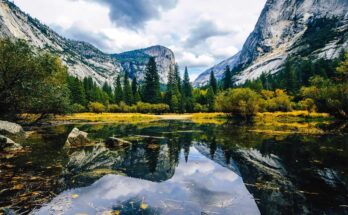
Deep in a valley fringed by a rumbling mountain, a tribe called Ash-Breath lived in uneasy peace with the volcano. Sometimes it slept. Sometimes it spat sparks. Sometimes it vomited rivers of fire that ate forests and fields.
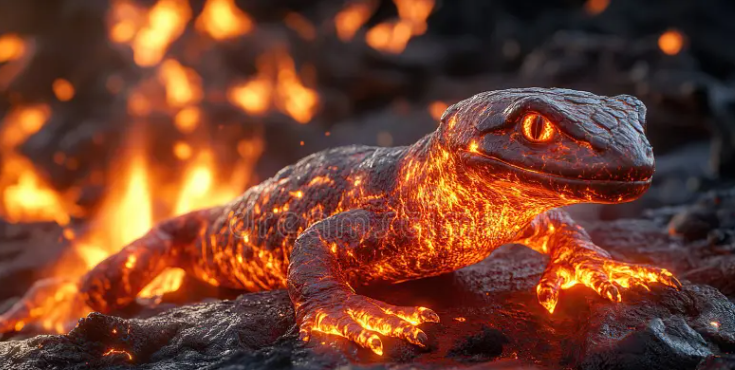
They believed a mighty fire lizard lived in its heart, angry when offerings were too small, calm when pleased.
That belief took a strange turn the day a real lizard crawled out of the smoke.
It wasn’t enormous. It was the size of a dog, scales black and red like cooled lava, eyes glowing faint amber. It emerged after a minor eruption, padding over still-warm rocks, tail flicking.
Children spotted it first. They screamed, then marvelled. Adults reached for weapons, then hesitated. The lizard should have burned. Yet its scales shone unharmed, gleaming with heat.
The shaman, gray-haired and bold, stepped forward. “Do not strike,” she commanded. “If we anger it, the mountain will devour us.”
The creature cocked its head, tasting the air with a forked tongue. It didn’t attack. It instead walked straight to a pile of offerings—fish, carved stones, dried flowers—and nosed through them like a picky dog, finally swallowing a charred bone.
Children laughed. “The fire lizard is hungry!”
From then on, the creature—quickly dubbed Ember-Scale—wandered the village freely. It basked near cookfires, stole bits of roasted meat, and curled around clay pots to keep them warm. Its scales radiated a gentle heat that felt soothing on cold nights.
People stopped fearing it and began using it.
“When Ember-Scale sits by the oven, the bread bakes faster,” women noted.
“It leads us to hot springs,” said hunters. The lizard would often trot ahead, pausing where warm vents breathed from the earth.
One dry season, when lightning set the forest ablaze, Ember-Scale walked calmly through the burning underbrush, unhurt, and emerged at the river’s edge. Children followed, using its presence as a guide to safety.
The tribe grew convinced: this was a piece of the volcano’s spirit made flesh, sent to warn and help.
But some grew greedy.
“If we bring Ember-Scale into other valleys,” a young warrior suggested, “their tribes will pay us for its favor. We will be rich in trade.”
The shaman shook her head. “Spirits are not cattle. We share a home. We do not own it.”
The warrior did not listen.
One night, he lured Ember-Scale with meat onto a sled and dragged it toward a mountain pass, hoping to present it as a living miracle to a neighboring tribe.
The lizard allowed itself to be pulled for a while, curious. But as the village lights faded, it stopped, claws digging into ash. Its scales flared brighter, heat rising.
The rope around it smoked, then snapped.
Ember-Scale hissed, not in anger, but disappointment. It flicked its tail, sending sparks into dry grass. In seconds, a ring of fire sprang up around the warrior.
He panicked, stumbling backward. The flames didn’t touch him, but they herded him—like a goat—back down the slope toward his own village.
The lizard followed slowly, unhurried, until they reached home.
The next morning, the shaman told the tribe, “The mountain gave us a sign. We share space with power. We do not drag it around like a tool.”
From then on, Ember-Scale came and went as it pleased. Sometimes it vanished into cracks near the volcano’s throat for days. Sometimes it slept beside children on cold nights, keeping them warm. Sometimes it sat on high rocks, staring into the crater, as if listening to a voice only it could hear.
Eventually, after many seasons, it walked back into the smoke and did not return.
People said it had gone home, back into the fire-heart of the world.
Future generations would lose the name Ember-Scale, but they kept one idea: that the earth itself could speak through animals—if humans listened instead of leashed.