In rural Tennessee, at the end of a long gravel road, a small rescue farm took in the animals nobody else wanted. That’s where Magnolia arrived—led shakily off a trailer, eyes clouded white, ears flicking like antennae searching the air.
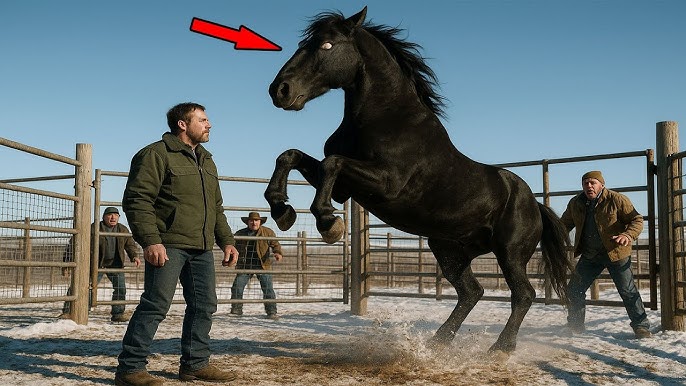
She’d gone blind over time, her previous owners said. Vet bills piled up. “We just can’t afford a horse we can’t ride,” they explained, handing over a worn halter.
At the sanctuary, Magnolia startled at new sounds. She bumped gently into fences, then learned their boundaries by feel. Volunteers talked to her constantly so she’d know where they were. “On your left, sweet girl,” they’d call, and she’d turn her head toward their voices, trusting the sound more than sight.
A video of her first days went up on the sanctuary’s Instagram and TikTok: a white mare stepping carefully through grass, guided by volunteers’ hands on her neck, learning that the world didn’t end where her vision did. Over soft music, text read: “She can’t see you, but she feels your love.”
The internet melted. People stitched the video, crying on camera, saying things like, “If I had land I’d take her so fast,” “Blind horses deserve love too,” “I’ll donate in her honor.” Donations did come—small, medium, surprising. Enough to secure hay and meds for several months.
The sanctuary wrote hopeful captions: “Maybe one day she’ll find a forever home with someone patient and kind.”
A few inquiries trickled in, but they faded when potential adopters learned about the long-term care, the medication, the special fencing, the need for companion animals, the fact that Magnolia would never be a riding horse.
So she stayed.
She grew to love the sound of a particular volunteer’s truck—a low rumble that meant apples and brushing and long monologues about human problems. When she heard it, Magnolia would lift her head and nicker softly, turning toward the driveway even though she couldn’t see it.
The volunteer, Jess, filmed their routines: Magnolia following her voice down the lane, Magnolia dozing as Jess braided her mane, Magnolia leaning her head against Jess’s chest while crickets sang. The videos did well online, but not quite “throw-the-world-into-action” well. Just enough to make strangers love a horse they’d never meet.
One frosty morning, Jess noticed Magnolia standing strangely still, head low. Her breathing was heavier, each exhale a cloud in the cold air. The vet came out, listened, frowned. Heart murmur, likely worsening. Old damage, maybe from years of strain she’d endured before.
They adjusted meds, watched her carefully. For a while, Magnolia seemed better. She still followed voices, still nuzzled pockets for treats. But there was a new heaviness in her steps, as if each hoof had to remember the ground before it trusted it.
Late one night, a storm rolled in, wind rattling the barn roof. Magnolia lay down in her stall, as she often did, legs folded neatly beneath her. This time, when the rain stopped, she didn’t get back up.
Jess found her at dawn, body still warm, breath gone. It looked like she was just sleeping. The vet said her heart had likely failed quietly in the night.
The sanctuary posted a video that evening. Old clips of Magnolia walking the pasture, head high, text overlay: “Run free, sweet Magnolia. You never saw the world, but you felt love in it.” The comment section became a virtual candlelight vigil—broken hearts, “fly high,” and “I’ll hug my horse a little tighter tonight.”
No adoption application ever came in time. Magnolia’s “forever home” turned out to be the sanctuary barn and the arms of the people who were there when she could no longer stand.
For Jess, the likes didn’t matter. What mattered was that a blind horse who had once been written off as useless had, for a little while, been the center of someone’s universe.